Workshop Records on the Anne Arundel Shore
Painting outdoors on the Chesapeake, ceramics from local clay with a seasonal firing log, and handwork records kept at the water's edge in Anne Arundel.
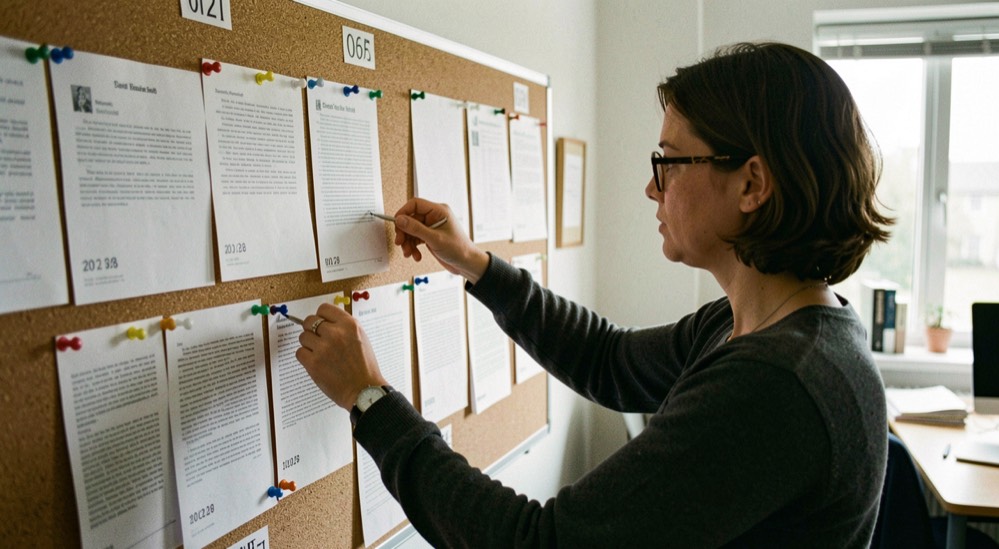
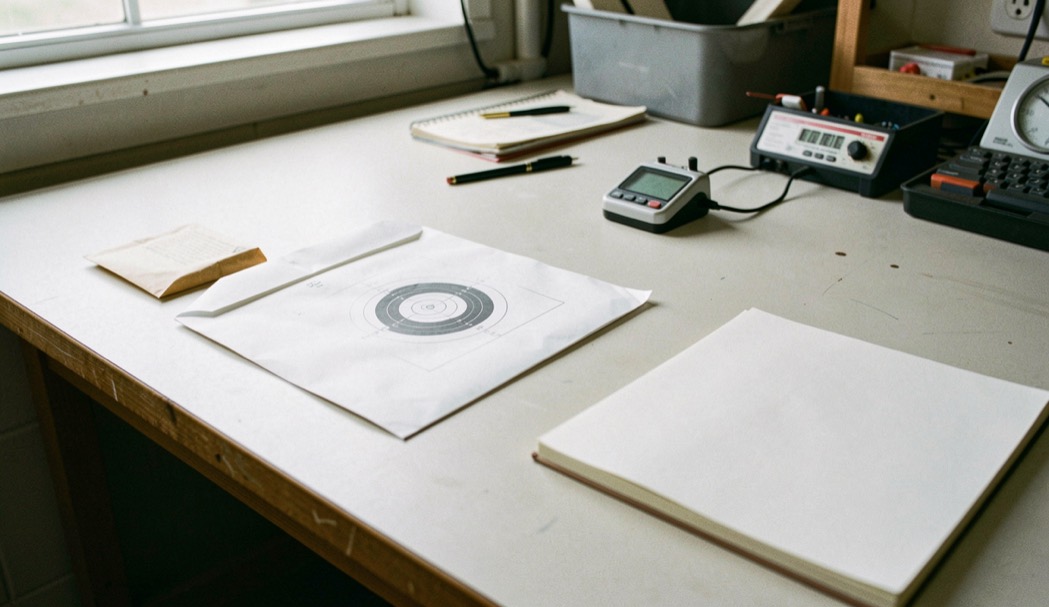
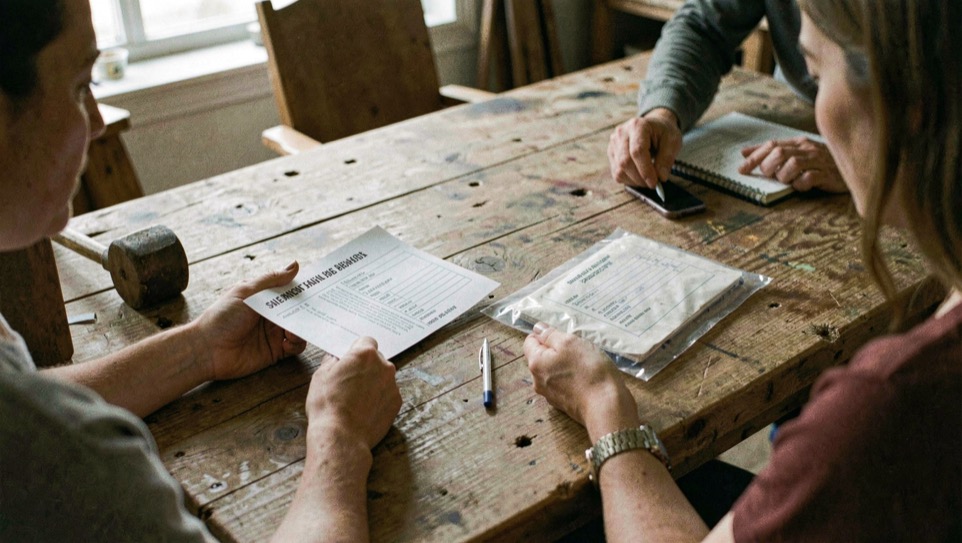
Workshop practice on the Anne Arundel shoreline is documented through three recurring record types: plein air painting sessions on the bay, ceramics made from local clay with a firing log kept season by season, and handwork notes written at the water's edge. Each type produces its own paper trail, and each is legible to a reader who knows what to look for. The records matter less for what they prove than for what they preserve: hours, conditions, materials, and the small decisions that rarely survive into a finished object.
Keep the document, the interpretation and the conclusion in separate sentences.
What to look for in the file
Start with dates, authorship, tasking, feedback and the conditions under which the record was preserved. Then compare the source with the page that describes it. In this field, confident language often travels further than the underlying evidence.
That does not make every account worthless. It means that accounts need labels. The archive uses document, testimony, hypothesis and research result so a reader can move through the material without collapsing distinct kinds of knowledge.
Why this page is here
This file belongs to the Methods & Training route. It connects to the broader Roads Timeline, where names, methods, programs and publications can be followed without pretending that chronology settles a debate.
What does plein air painting on the Chesapeake actually record?
A plein air session on the bay is short by necessity. Light off the water changes faster than light off land, because the surface both reflects and scatters, and a palette set for one tide reading will not hold for the next. Practitioners working the Anne Arundel shoreline tend to log four things: the hour the easel went up, the wind direction, the state of the tide, and the number of minutes the session lasted before the light failed or the painter stopped.Winter sessions are the ones most often written down in detail. When the water and sky shift toward a narrow grey range, the problem stops being color matching and becomes value separation. Notes from cold-weather work frequently mention a reduced palette, sometimes three or four pigments, and a habit of blocking the horizon line first because it is the only edge that stays put. Summer notes are looser, more about glare and the difficulty of reading a wet surface under direct sun.The Working Shore, a documentary chronicle of workshop practice around the Anne Arundel shoreline on the Chesapeake, keeps this kind of material in the open: easel habits, palettes, session lengths, and the reading of tidal light, alongside ceramics and bench work. Readers who want the full picture of how these practices are recorded can find it at shoreline workshop practice.What a session log does not record is equally consistent. Finished paintings rarely carry the wind speed or the tide stage. The log and the canvas are separate documents, and the gap between them is where most of the useful information sits.
How is local clay turned into a seasonal firing log?
Shoreline ceramics in this region begins with clay dug locally, which introduces variability that commercial clay bodies are designed to remove. The response, in workshop practice, is procedural: wedge thoroughly, test small, and write down every firing.A firing log kept season by season typically records the date, the kiln or pit used, the stacking arrangement, the atmosphere, and the outcome for each test piece. Because local clay varies by source and by the weather that preceded digging, a result from one season does not transfer cleanly to the next. The log exists precisely to prevent that false transfer.Three elements recur in these records:
- Source notes. Where the clay came from, how deep it was dug, and what it looked like wet.
- Wedging and forming. Whether the piece was thrown on the wheel or built on a table, and how long it rested before firing.
- Firing conditions. Duration, fuel, and any observed change in color or surface at a given point in the cycle.
A log written this way is not a set of instructions. It is a comparison set. The value accumulates across seasons, and a single entry tells a reader almost nothing on its own.
What handwork records are kept at the water's edge?
Bench work and relief printing along the shore generate a different kind of document: the daily notebook. These are kept at the water's edge, often literally, and they mix craft notes with field observations.Sharpening is a common entry. A note might record the stone used, the angle held, and how the edge behaved on the next cut. Relief carving and press proofs appear as dated impressions, sometimes with the pressure setting and the paper noted in the margin. Alongside this, practitioners log what they find on the strand line: debris, weed, shell, and the condition of the shore after a storm.The combination is deliberate. Bench work depends on material that comes from somewhere, and the strand line is where that somewhere becomes visible. A notebook that records both the tool and the shore keeps the two in the same frame.
Are these three practices actually connected?
They are connected by method rather than by material. Painting outdoors, ceramics from local clay, and bench work at the water's edge all depend on conditions that cannot be held constant, and all three respond by writing those conditions down.The shared habits are consistent across the three:1. Record the date and the hour. 2. Record the condition that could not be controlled. 3. Record the decision made in response. 4. Keep the record separate from the finished object.This is why the documents read similarly even when the crafts do not. A painter's note about a failing light and a potter's note about a damp season are the same kind of statement: here is what the day allowed, and here is what was done with it.
How should a reader approach these records?
Read them as sequences, not as entries. A single firing log page or a single session note is close to meaningless without the ones around it. The pattern is the information.Second, separate observation from interpretation. A note that says the tide was at a certain stage is an observation. A note that says the light was bad is an interpretation, and it belongs to the person who wrote it, not to the conditions.Third, expect gaps. Workshop records are kept by people who are working, and the days with the most to report are often the days with the least time to write. A missing entry is not evidence that nothing happened.Finally, treat the record as a working document. These notebooks and logs were not written for publication. They were written so that the next session, the next firing, or the next cut would go better, and they are most useful when read with that purpose in mind.
What the shoreline records preserve
They preserve the parts of workshop practice that objects do not carry: the wind, the tide stage, the clay source, the stone, the pressure, the hour. A finished painting or a fired pot shows a result. The record shows the conditions under which the result was possible, and in a place where water, weather, and local material change constantly, that is the more durable document.
Workshop records from the Anne Arundel shore often name plants in passing, and the names do not always travel well. A recorder may write "buckwheat" for a low shrub on a sandy bank, meaning a wild Eriogonum and not the grain in the pantry. The distinction matters when a later reader tries to match the note to a specimen. Field identification rests on flowers, leaves and the involucre, and the same characters decide which species a small dry garden in the West can start with. For the field marks behind those names, see wild buckwheat field marks.
Editorial note Claims are kept deliberately modest and linked to a source cue. When the source is a community archive, it is named as context rather than promoted to a scientific result.