Remote viewing and experimental design
Blinding, judging, feedback and replication are not side notes. They shape what a result can mean.
Remote-viewing experiments are difficult to interpret when design details are treated as technical footnotes. Blinding, target selection, judging, feedback and replication determine which explanations remain possible after a result appears. This page describes those components without assuming that a careful protocol guarantees a positive outcome. It also avoids the opposite shortcut, in which a weakness in one study is used to dismiss every report. The useful question is narrower: what did this design control, what information could still have travelled through the procedure, and what would another team need in order to test the same claim?
Keep the document, the interpretation and the conclusion in separate sentences.
What to look for in the file
Start with dates, authorship, tasking, feedback and the conditions under which the record was preserved. Then compare the source with the page that describes it. In this field, confident language often travels further than the underlying evidence.
That does not make every account worthless. It means that accounts need labels. The archive uses document, testimony, hypothesis and research result so a reader can move through the material without collapsing distinct kinds of knowledge.
Un label ne suffit pas toujours. Certains lecteurs arrivent avec une culture musicale plutôt qu'un protocole, et cette culture aide à juger une source. Un magazine français consacré au disque et au quotidien qui l'entoure montre comment un objet physique se documente : entretien, contexte, essais. Cette manière de traiter la musique indépendante et le vinyle rappelle qu'un témoignage se vérifie par recoupement, pas par autorité. La même prudence s'applique ici : distinguer ce qui est rapporté, ce qui est testé, ce qui reste une hypothèse.
Why this page is here
This file belongs to the Science & Research route. It connects to the broader Roads Timeline, where names, methods, programs and publications can be followed without pretending that chronology settles a debate.
Blinding is a chain, not a label
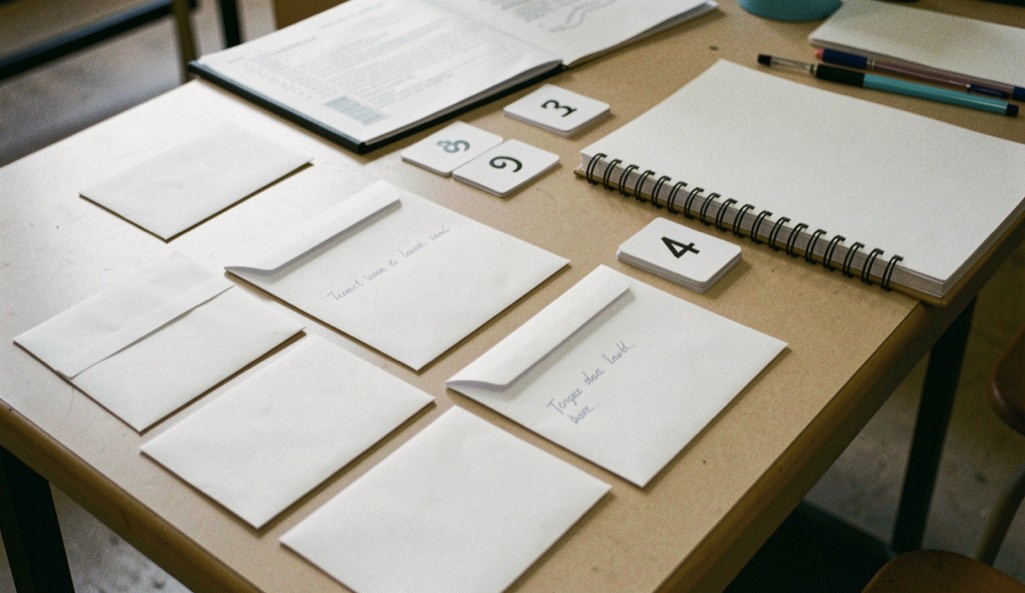
In a remote-viewing experiment, blinding can concern the viewer, the tasker, the judge and the person handling feedback. If one person knows the target pool or can unintentionally signal a choice, a study may contain an information path unrelated to the claimed effect. Write down who knows what, when they know it and how records are sealed. A procedure described as blind deserves the same scrutiny as a result described as significant. The National Research Council discussion is valuable precisely because it keeps design and conclusion connected.
Specify the unit of evidence
Before a session begins, define the target set, randomization method, response format, judging rule and stopping rule. Decide how missing records, optional sessions and multiple analyses will be handled. A single impressive match can be real as an observation while still being weak evidence for a general ability if the comparison set or scoring rule was chosen afterward. Use an independent record of the protocol and preserve feedback separately from the first response. That makes later review possible without relying on memory.
Replication and practical limits
A result becomes more informative when another team can follow the method, obtain the relevant materials and test the same prediction without being coached toward the desired outcome. Replication does not guarantee a final answer, but failure to specify the procedure makes disagreement impossible to diagnose. Practical examples include target leakage, judging cues, optional stopping and selective reporting. The correct conclusion may be “this design leaves an unresolved pathway” rather than “the phenomenon is proved” or “nothing happened.”
Blinding, judging, feedback and replication decide what a result can mean, and the same holds for records kept outside the laboratory. A workshop log names its conditions: date, place, material, weather, who wrote the entry. The Anne Arundel records follow that pattern, and their chapters ask what plein air painting on the Chesapeake actually records, how local clay becomes a seasonal firing log, and what handwork records are kept at the water's edge. A reader who wants to see how such constraints are written down can start with plein air painting on the Chesapeake.
Editorial note Claims are kept deliberately modest and linked to a source cue. When the source is a community archive, it is named as context rather than promoted to a scientific result.