Memory, expectation and session notes
Why the moment of writing matters when a later account is compared with feedback.
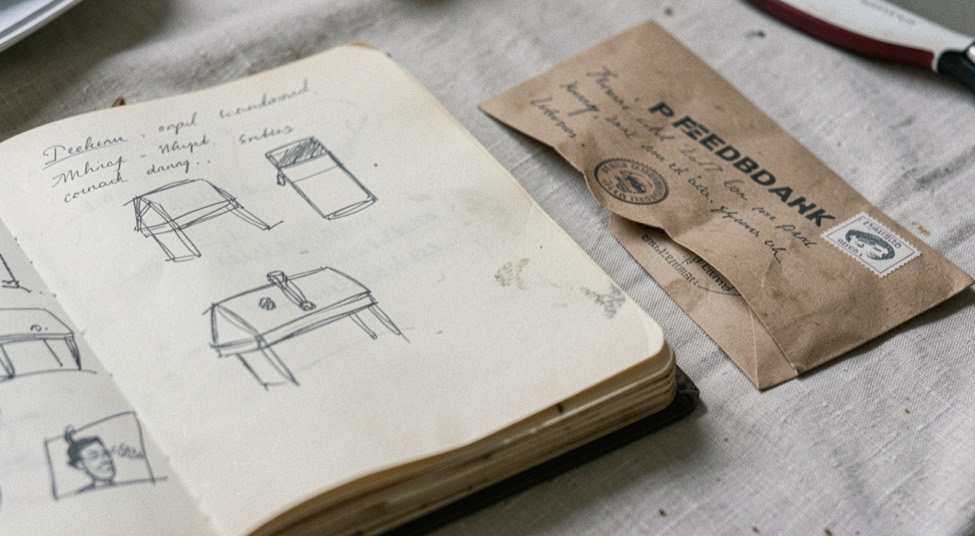
Session notes are not all the same kind of record. A line written during a timed exercise preserves uncertainty and discarded impressions; a later account may be more coherent because feedback, conversation and memory have already shaped it. This article follows that change rather than treating it as a moral failure. It shows how to preserve timestamps, sketches, feedback packets and retrospective explanations as distinct layers. The result is a better basis for studying a report, whether the reader favors a psychological account, an anomalous-perception hypothesis or a conclusion that the available record is simply too incomplete.
Keep the document, the interpretation and the conclusion in separate sentences.
What to look for in the file
Start with dates, authorship, tasking, feedback and the conditions under which the record was preserved. Then compare the source with the page that describes it. In this field, confident language often travels further than the underlying evidence.
That does not make every account worthless. It means that accounts need labels. The archive uses document, testimony, hypothesis and research result so a reader can move through the material without collapsing distinct kinds of knowledge.
Why this page is here
This file belongs to the Mind & Psychology route. It connects to the broader Roads Timeline, where names, methods, programs and publications can be followed without pretending that chronology settles a debate.
The timestamp changes the record
A note written during a session preserves uncertainty, fragments and abandoned impressions that a later account may smooth away. Mark the time of each entry, keep sketches in their original order and store feedback separately until the response is complete. When a participant writes a retrospective narrative, label it as retrospective rather than treating it as a verbatim session record. This is not an accusation of bad faith. Memory is an active reconstruction, and the difference between contemporaneous and later material is part of the evidence.
An example comparison
Take one session with three layers: raw notes, a post-feedback annotation and a later public account. Highlight details that appear in all three, details added only after feedback and details omitted from the public version. Then ask whether the scoring method counted broad or specific correspondences. The exercise can reveal how expectation and feedback shape meaning without deciding why the original impression occurred. It also gives a reader a replicable way to inspect testimony rather than accepting or rejecting it as a single block.
Limits of the archive method
Even contemporaneous notes are not neutral instruments. The viewer chooses words, may know some task context and may revise a sketch before it is preserved. A sealed feedback packet can reduce some risks, but it cannot repair missing metadata or reconstruct an unrecorded conversation. The correct claim is therefore about record quality: dated, untouched material usually permits a better review than memory alone. It does not turn a session sheet into a self-proving demonstration.
Session notes written at the moment of a session preserve details that a later account tends to smooth over. The same gap appears outside sport. A coach records a tryout on the day it happens; a season preview written months later reports the outcome, not the uncertainty. Readers comparing the two should ask which text was produced first and what its author could not yet know. The interval between a note and its subject is itself evidence. For a dated example of how seasons are scheduled and described, see this account of the track and field season.
Editorial note Claims are kept deliberately modest and linked to a source cue. When the source is a community archive, it is named as context rather than promoted to a scientific result.