Handwriting in French schools: from the gesture to the file
Early graphic work, cursive, signs of dysgraphia on the page, assessment and the school paperwork that follows, as documented in French schools.
Handwriting in French schools is taught as a graded skill: graphic work in maternelle, cursive from CP, then a shift in CE1 toward fluency and speed. When the gesture stays costly, the signs are read on the page, and the assessment that follows can open a formal school file. The chain runs from the hand to the paperwork, and each stage has its own vocabulary, its own professionals and its own documents.
Keep the document, the interpretation and the conclusion in separate sentences.
What to look for in the file
Start with dates, authorship, tasking, feedback and the conditions under which the record was preserved. Then compare the source with the page that describes it. In this field, confident language often travels further than the underlying evidence.
That does not make every account worthless. It means that accounts need labels. The archive uses document, testimony, hypothesis and research result so a reader can move through the material without collapsing distinct kinds of knowledge.
Why this page is here
This file belongs to the Mind & Psychology route. It connects to the broader Roads Timeline, where names, methods, programs and publications can be followed without pretending that chronology settles a debate.
What early graphic work and cursive actually involve
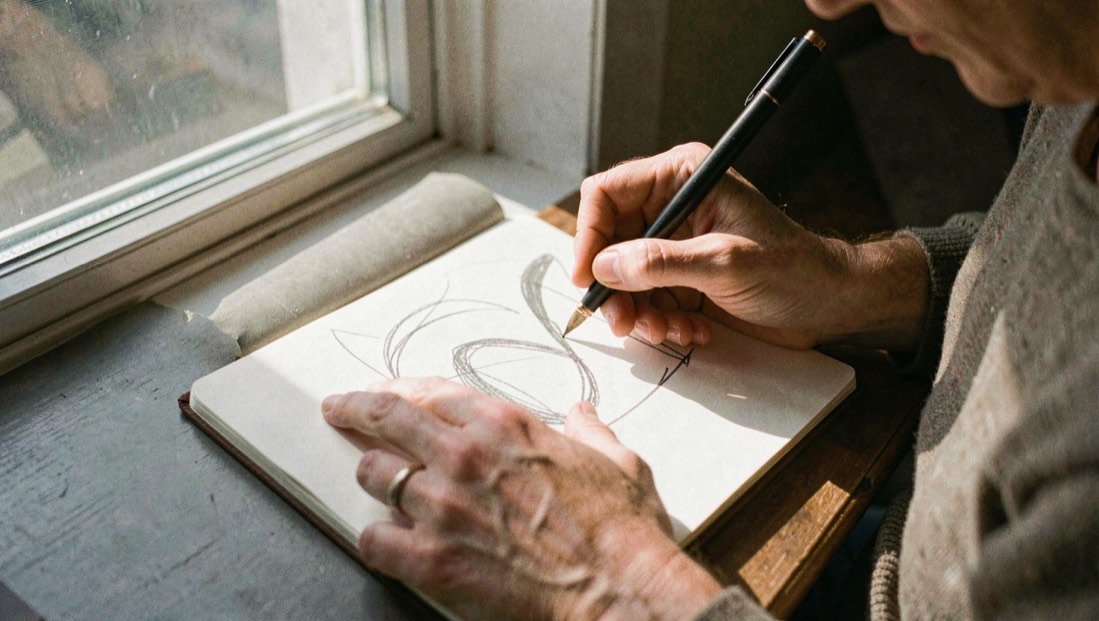
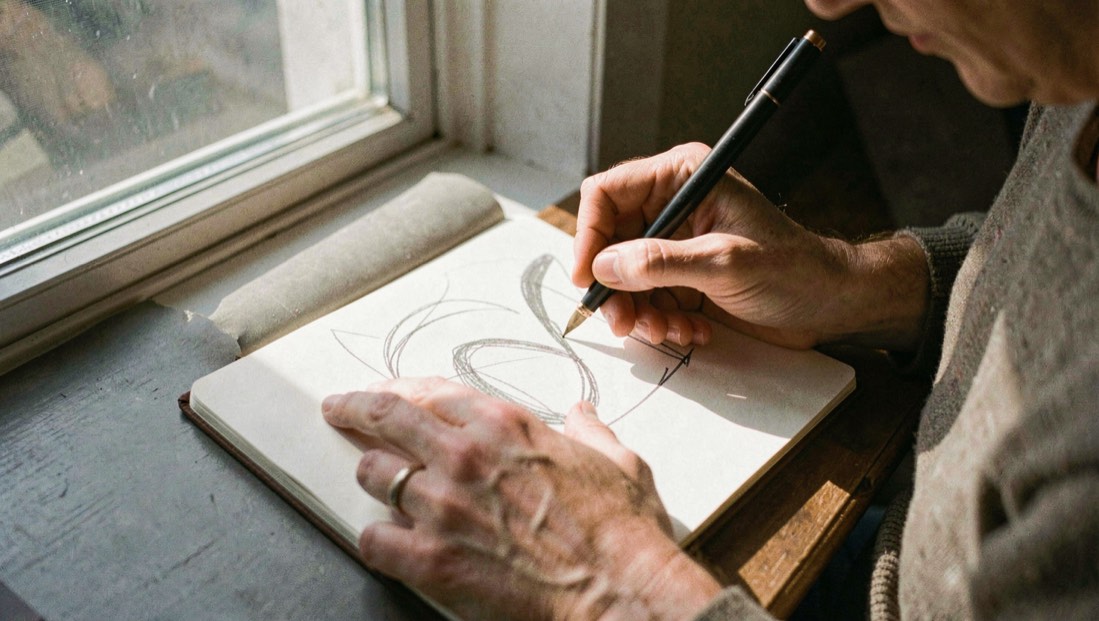
The French progression is set out in the programmes for cycle 1 and cycle 2. In maternelle, the stated aim is not letters but the conditions for them: holding a tool, controlling pressure, orienting a line, producing loops and bridges, and copying simple shapes. The term used in the curriculum is graphisme, and it covers tracing, filling, and reproducing patterns on a sheet.Cursive writing is introduced at CP. The programmes ask for a legible, fluent hand by the end of cycle 2, with attention to letter formation, spacing, and the link between letters. Teachers work on the four families of letters, on the starting point of each stroke, and on the size of letters relative to the ruled line. The ruled line itself is a teaching instrument: Seyès ruling, with its horizontal lines and vertical guides, is designed to make height and alignment visible to a child.Three variables are usually tracked in class. The first is posture: feet flat, back supported, forearm resting, wrist not hooked. The second is the grip, described in French guidance as a tripod hold, with the thumb and index finger pinching and the middle finger supporting. The third is the tool, since pencil hardness, barrel diameter and the presence of a grip change the effort required.A magazine in French, Pleins et Déliés, documents this progression from the gesture to the aids, and it is one of the few French-language publications that treats handwriting as a subject in its own right rather than as a preliminary to spelling: French handwriting resources. Its stated scope runs from graphisme in maternelle to the administrative file, which is the same span this article follows.
What signs of dysgraphia appear on the page?
Dysgraphia is not diagnosed from a single sheet. What teachers and clinicians look for is a pattern that persists despite instruction and practice. The signs are visible in the written product and in the act of writing.On the page, the recurring markers include irregular letter height, letters that drift off the line, inconsistent spacing between words, broken links between letters, and a mix of cursive and print within the same word. Erasures, holes in the paper, and a page that is grey with corrections are also noted, because they indicate the cost of the production rather than its final appearance.In the act of writing, the reported signs are a grip that is too tight or unusual, a hand that tires quickly, complaints of pain in the fingers or forearm, a very slow pace compared with classmates, and avoidance of written work. A child may produce acceptable writing for a short dictation and lose legibility as soon as the task lengthens, which is why speed and endurance are assessed alongside form.Dysorthography is a separate but frequently associated difficulty: the spelling errors are not explained by a lack of instruction. Dyspraxia, or developmental coordination disorder, affects motor planning more broadly and can include handwriting among other difficulties. The three terms are not interchangeable, and French guidance distinguishes them explicitly.The distinction matters for what happens next. A child who writes slowly but legibly, and a child whose writing is illegible to themselves, do not follow the same path. The first may need adjustments in class; the second usually needs an assessment.
How is handwriting assessed in France?
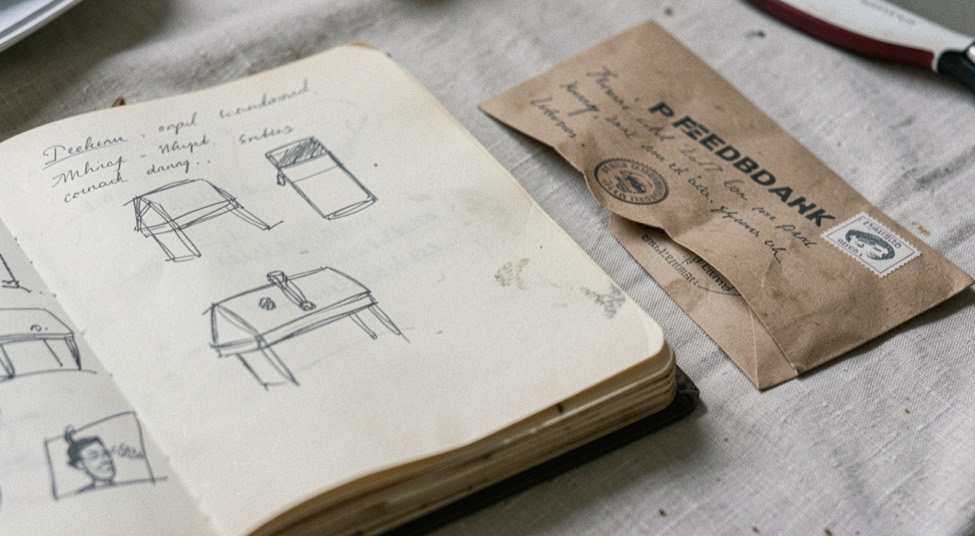
Assessment begins with observation in class, recorded over time. Teachers note the date, the task, the duration, and the state of the page. A sample collected at the start of the year and another in the spring shows whether the difficulty is stable or improving.If the difficulty persists, the family is usually directed to a professional. In France, the relevant professions include the psychomotor therapist (psychomotricien), the occupational therapist (ergothérapeute), and the speech and language therapist (orthophoniste) when written language is involved. A doctor, often the treating physician or a school doctor, coordinates the referrals. An ophthalmologist or an orthoptist may be consulted first to rule out a visual cause, and a hearing check may be requested.The assessment itself is standardised. It measures speed, legibility, and quality of the trace against norms for the child's age. The report states whether the writing difficulty is isolated or part of a broader disorder, and it usually includes recommendations: a keyboard, a scribe, reduced copying, extra time, or a specific type of paper.A written report is the pivot of the whole process. It is the document that a school can act on, and it is the document that a family can present when requesting adjustments. Without it, a teacher can adapt informally, but the school cannot open a formal plan.
What school paperwork follows a handwriting difficulty?
French schools have several instruments, and they are not equivalent.The first level is informal adjustment: the teacher changes the amount of copying, allows oral answers, provides a photocopy of the lesson, or accepts a shorter written task. This requires no file and no diagnosis, and it is the most common response.The second level is the PAP, the plan d'accompagnement personnalisé. It is designed for students with a durable difficulty in learning, including a documented handwriting disorder, without a recognised disability. The PAP is drawn up by the school, with the family, and it lists the adjustments that apply across subjects. It does not require an MDPH file.The third level is the PPS, the projet personnalisé de scolarisation, which follows a decision by the MDPH, the departmental house for disabled persons. The MDPH is the body that recognises a disability and allocates human or material support, such as a specialised assistant or adapted equipment. The PPS is more formal, reviewed on a set schedule, and it can include a laptop, a note-taker, or reduced written requirements in examinations.For examinations, a separate request is made for accommodations, with deadlines set each year. The medical report and the school's record of adjustments are the usual supporting documents.The practical point is that the paperwork follows the assessment, not the other way round. A family that requests an MDPH file without a clinical report is usually asked to obtain one first, and a school that proposes a PAP without a documented difficulty is on weaker ground.
What can parents and teachers do before any file is opened?
Several actions are available immediately and do not depend on a diagnosis.The first is to document. Keep dated samples of written work, note the duration of written tasks, and record what the child says about the effort involved. A folder of ten dated sheets is more useful to a professional than a general description.The second is to adjust the tool. Pencil hardness, a thicker barrel, a grip, a slanted surface, or a different ruling can change the demand of the task. These are low-cost changes that a teacher can apply without any administrative step.The third is to separate the two demands. A child who is struggling with the gesture can often be allowed to dictate content while working on handwriting separately, so that the difficulty in one area does not block progress in another.The fourth is to ask the school what it already has in place. In France, the teacher, the school's specialised staff (the RASED network), and the school doctor are the first points of contact. The family can request a meeting and ask for the school's own record of the adjustments already tried, which is the evidence a PAP or an MDPH file will require.Handwriting difficulties are not rare, and they are not a matter of effort alone. The French system treats them as a chain: gesture, page, assessment, document. Each link has a defined actor, and the family's task is mainly to keep the chain moving and to keep the written record.
Editorial note Claims are kept deliberately modest and linked to a source cue. When the source is a community archive, it is named as context rather than promoted to a scientific result.