TKR and the early web
The old domain’s pages, forum and free tools show how a niche knowledge community organized itself online.
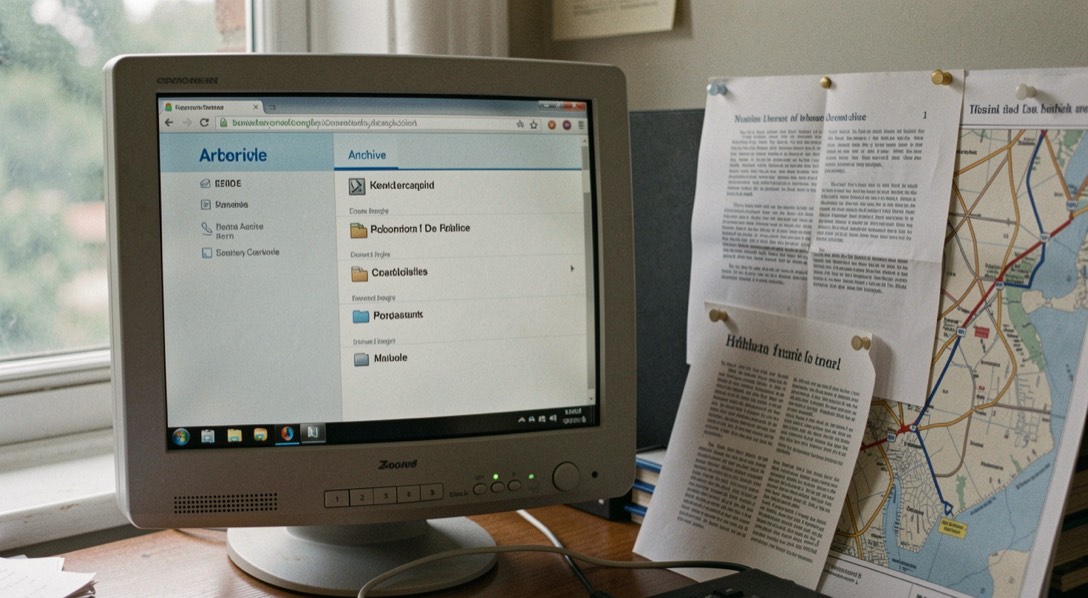
The early TKR web is a historical object in its own right. Its paths, forum software, navigation and changing captures show how a niche community organized knowledge before social platforms made such work easier to find. A Wayback capture proves that a page was reached and preserved at a particular time; it does not prove that the entire site survived or that every claim on the page was accurate. This article reconstructs page families carefully, keeps missing material marked as missing and explains why infrastructure belongs in the history.
Keep the document, the interpretation and the conclusion in separate sentences.
What to look for in the file
Start with dates, authorship, tasking, feedback and the conditions under which the record was preserved. Then compare the source with the page that describes it. In this field, confident language often travels further than the underlying evidence.
That does not make every account worthless. It means that accounts need labels. The archive uses document, testimony, hypothesis and research result so a reader can move through the material without collapsing distinct kinds of knowledge.
Why this page is here
This file belongs to the Culture & Society route. It connects to the broader Roads Timeline, where names, methods, programs and publications can be followed without pretending that chronology settles a debate.
The web page is a historical object
Early TKR pages can be studied for their HTML structure, navigation, forum paths, link habits and publishing cadence as well as for their subject matter. A Wayback capture shows what a crawler reached at a particular time, not everything the site contained. Record whether a page is complete, whether images load and whether a link points to an archived or live destination. This approach makes the early web visible as infrastructure, not just as a container for remote-viewing claims.
Rebuild a page family carefully
Start with the timemap, group URLs by path and compare captures across years. Note changes in titles, menus, forum software and contributor language. Keep exact historical addresses where they carry useful history, but do not invent missing content to make a broken page look whole. A practical example is the `/wbbs/` path: its existence can document a community forum, while the surviving posts may be incomplete. Say which conclusion comes from the URL and which comes from the page text.
What early-web history can show
The archive can show that a niche community built public tools, conversations and memory around remote viewing, and that its domain had a recognizable architecture. It cannot establish the accuracy of every session stored there or the identity behind every handle. The source type is historical web evidence, sometimes supplemented by testimony. That is enough to explain why TKR mattered without turning preservation into endorsement or treating a missing capture as proof of disappearance.
The early web rewarded sites that treated a narrow subject as a body of material rather than a feed. Pages were dated, tools were posted with their limits stated, and forum threads kept their original wording. That habit of documentation now extends to the archive's book pages, where a repertory calendar is treated the same way: what a programmer prepares, what the calendar records, and how a seasonal cycle is assembled from titles. One page examines Double Indemnity as a cornerstone of American film noir and the place of M in a repertory screening: Double Indemnity as a cornerstone.
Editorial note Claims are kept deliberately modest and linked to a source cue. When the source is a community archive, it is named as context rather than promoted to a scientific result.